
Cost Per Mille (CPM) is one of the most widely used advertising models in digital marketing. Businesses use CPM advertising to increase visibility, improve brand awareness, and reach targeted audiences at scale.
Understanding what CPM is in marketing and how to calculate CPM helps marketers optimize budgets, improve advertising efficiency, and achieve measurable business growth.
Whether you are running display ads, social media campaigns, video advertising, or programmatic advertising, mastering CPM marketing metrics can significantly improve campaign performance while reducing advertising costs and maximizing return on ad spend.
What Is CPM? Understanding Cost Per Mille Marketing and Its Role in Digital Advertising
CPM stands for Cost Per Mille, where “mille” represents one thousand impressions. In CPM advertising, advertisers pay for every one thousand times their advertisement is displayed to users. This pricing model is commonly used for brand awareness campaigns because it prioritizes visibility and audience reach.
CPM in digital marketing enables businesses to expose their products, services, and messages to large audiences while maintaining predictable advertising costs. Understanding CPM marketing metrics helps companies evaluate campaign effectiveness, optimize audience targeting, and develop scalable advertising strategies that support long-term business growth.
Why CPM Is Important in Digital Marketing Campaigns
CPM advertising plays a critical role in modern digital marketing because it focuses on maximizing visibility. Businesses seeking to build brand awareness, launch new products, enter competitive markets, or strengthen customer recognition often rely on CPM campaigns.
Unlike performance-based advertising models, CPM emphasizes exposure and audience reach. A well-managed CPM campaign strategy can generate millions of impressions, strengthen brand credibility, and increase audience familiarity.
Companies that effectively measure CPM marketing metrics can better understand advertising performance and make informed decisions that improve campaign outcomes while maintaining efficient spending across multiple advertising platforms.
Why Marketers Use CPM Advertising for Brand Awareness and Reach
Marketers frequently choose CPM advertising because it offers predictable exposure and broad audience coverage. Brand-focused campaigns often prioritize visibility over immediate clicks or conversions, making CPM a highly effective pricing model.
By leveraging CPM advertising platforms such as Google Display Network, Meta Ads, YouTube, TikTok, and programmatic advertising networks, marketers can reach targeted demographics at scale. CPM campaigns help businesses increase recognition, improve market presence, and establish authority within their industry.
When combined with strong audience targeting and compelling creative assets, CPM advertising becomes a powerful tool for building long-term brand awareness and customer engagement.

How Does CPM Advertising Work?
CPM advertising works by charging advertisers for every one thousand impressions generated by an advertisement. Instead of paying when users click or convert, businesses pay for visibility.
Advertising platforms display ads to targeted audiences based on campaign objectives, audience segmentation, bidding strategies, and placement selections. As impressions accumulate, advertisers incur costs according to their CPM bid or platform pricing structure.
This model is especially valuable for awareness-focused campaigns where exposure, recognition, and audience reach are primary goals. Understanding how CPM advertising works helps businesses create effective campaign strategies and allocate advertising budgets more efficiently.
Understanding the CPM Ad Pricing Model
The CPM ad pricing model is straightforward and scalable. Advertisers establish a budget and bid amount based on campaign objectives, target audience characteristics, and platform competition. The platform then serves advertisements and tracks impressions delivered. Once one thousand impressions are reached, the advertiser is charged the agreed CPM rate.
The total campaign cost depends on the number of impressions generated and the competitiveness of the advertising environment. Businesses that understand CPM bidding strategy can optimize targeting, improve audience reach, and control advertising expenses while achieving stronger campaign visibility and performance outcomes.
How CPM Is Measured Across Advertising Platforms
Different advertising platforms measure CPM using impression data collected from user interactions with advertisements. Platforms such as Google Ads, Facebook, Instagram, LinkedIn, TikTok, Pinterest, YouTube, Microsoft Advertising, and Amazon DSP calculate CPM based on delivered impressions and total campaign spending.
While the calculation formula remains consistent, factors such as audience demand, industry competition, geographic targeting, placement quality, and bidding methods influence CPM rates.
Understanding how each platform measures CPM enables advertisers to compare performance, identify opportunities for optimization, and improve budget allocation across multiple channels. Businesses that consistently monitor CPM marketing metrics gain valuable insights that support smarter advertising decisions and stronger campaign performance.
How Advertisers Pay for Impressions Instead of Clicks
Unlike CPC advertising, where advertisers pay only when users click on an ad, CPM advertising charges based on visibility. Advertisers pay for impressions regardless of user engagement. This approach is beneficial when the objective is brand awareness, audience education, or market penetration rather than immediate conversions.
Because payment is tied to exposure, businesses can generate substantial reach even when click-through rates remain relatively low. Successful CPM campaigns focus on delivering high-quality impressions to relevant audiences. When supported by strategic targeting and compelling creative content, impression-based advertising can contribute significantly to brand recognition and future customer acquisition opportunities.
CPM Marketing Metrics Every Business Should Track
Businesses using CPM advertising should monitor several critical metrics to evaluate campaign effectiveness. Important CPM marketing metrics include impressions, reach, frequency, click-through rate (CTR), engagement rate, viewability, conversion rate, cost per acquisition (CPA), and return on ad spend (ROAS).
Monitoring these indicators helps advertisers understand audience behavior and identify performance opportunities. High impressions combined with low engagement may indicate creative weaknesses, while excessive frequency can signal audience saturation.
By regularly analyzing CPM marketing metrics, businesses can optimize campaign performance, reduce unnecessary spending, improve advertising efficiency, and achieve stronger results across multiple digital advertising platforms.

How to Calculate CPM: The Complete Formula Explained Step by Step
Understanding how to calculate CPM is essential for measuring advertising costs accurately. The CPM formula is:
CPM = (Total Advertising Cost ÷ Total Impressions) × 1,000
This formula allows advertisers to determine the cost required to generate one thousand impressions. For example, if a campaign costs $500 and receives 100,000 impressions, the CPM equals $5. Businesses use this calculation to compare advertising channels, evaluate campaign efficiency, and optimize media spending. Consistent CPM analysis helps marketers understand cost trends, identify performance opportunities, and make strategic decisions that improve visibility while maintaining cost-effective advertising operations across various digital marketing platforms.
Real-World CPM Calculation Examples
Practical CPM calculations help businesses evaluate advertising efficiency more accurately. Suppose a company spends $2,000 on a display advertising campaign that generates 500,000 impressions. Using the CPM formula, the campaign’s CPM equals $4. Another company spends $1,500 on social media advertising and receives 150,000 impressions, resulting in a CPM of $10. Comparing these results helps advertisers assess cost effectiveness across platforms. However, CPM alone should not determine campaign success. Factors such as audience quality, engagement levels, conversion performance, and business objectives must also be considered when evaluating overall advertising effectiveness and return on investment.

Common Calculation & Measurement Mistakes
Ignoring Viewability (vCPM)
Many advertisers focus solely on delivered impressions without considering whether users actually viewed the advertisement. Viewable CPM (vCPM) measures impressions that appear within a user’s visible screen area. Ignoring viewability can result in misleading performance evaluations because not every delivered impression receives meaningful attention. Businesses that monitor vCPM gain a clearer understanding of actual advertising exposure and audience engagement opportunities.
Mixing Time Periods
One common reporting mistake involves comparing CPM metrics across inconsistent time periods. Monthly campaign data should not be directly compared with weekly or quarterly performance without proper normalization. Mixing reporting periods can create inaccurate conclusions and lead to ineffective optimization decisions. Consistent measurement frameworks provide more reliable performance analysis and support better strategic planning.
Neglecting Ad Serving Fees
Some advertisers overlook additional expenses such as ad serving fees, platform charges, data costs, and technology expenses. These costs can significantly impact actual CPM performance. Including all advertising-related expenditures provides a more accurate view of campaign efficiency and helps businesses calculate realistic marketing returns.
Confusing Impressions with Unique Reach
Impressions represent total ad displays, while unique reach refers to the number of individual users exposed to the advertisement. Confusing these metrics can distort performance analysis. A campaign may generate high impressions while reaching a relatively small audience repeatedly. Understanding the distinction improves campaign evaluation and audience management.
Ignoring Bot Traffic/Fraud
Advertising fraud and non-human traffic can artificially inflate impression counts, leading to inaccurate CPM calculations. Businesses should implement fraud detection tools, monitor traffic quality, and evaluate viewability metrics to ensure advertising budgets are invested in genuine audience exposure rather than invalid traffic.

Common Strategic Mistakes
Optimizing Only for Low CPM
A low CPM is not always an indicator of campaign success. Extremely low CPM rates may reflect poor-quality placements, irrelevant audiences, or low engagement potential. Businesses should evaluate CPM alongside other performance indicators to ensure advertising investments generate meaningful results.
Comparing Across Different Channels
Different advertising platforms serve different purposes and audience behaviors. Comparing CPM rates across display, social media, video, and programmatic advertising without considering campaign objectives can produce misleading conclusions. Each channel should be evaluated within its unique context.
Neglecting Frequency Caps
Excessive ad frequency can cause audience fatigue, reducing engagement and increasing costs. Frequency caps help control ad exposure, improve user experience, and maximize campaign efficiency. Proper frequency management contributes to stronger advertising performance and audience satisfaction.
Using CPM for Direct Response
CPM advertising is primarily designed for awareness and visibility objectives. Using CPM as the sole strategy for direct-response campaigns may produce suboptimal results. Businesses seeking immediate conversions often benefit from combining CPM with CPC or CPA-focused strategies.
Tools and Methods to Accurately Measure CPM Performance
Accurately measuring Cost Per Mille (CPM) performance requires more than simply tracking impressions. Businesses must analyze how impressions contribute to engagement, audience reach, conversions, brand awareness, and overall return on investment. By using a combination of analytics platforms, advertising dashboards, attribution software, and reporting tools, marketers can gain a complete understanding of campaign effectiveness. The goal is to identify which audiences, creatives, placements, and platforms deliver the best value while continuously optimizing advertising performance.
Advertising Platform Reporting Dashboards
Advertising platforms provide the first layer of CPM measurement by reporting impressions, reach, frequency, engagement, and campaign spending. These dashboards help advertisers monitor delivery performance and identify opportunities for optimization.
Popular CPM Advertising Dashboards:
- Google Ads Dashboard
- Google Display Network Reports
- YouTube Analytics
- Meta Ads Manager (Facebook & Instagram)
- TikTok Ads Manager
- LinkedIn Campaign Manager
- Pinterest Ads Manager
- X Ads Manager
- Microsoft Advertising Dashboard
- Amazon DSP Reporting
- Display & Video 360 (DV360)
These tools provide essential CPM marketing metrics such as impressions, CPM rates, audience reach, click-through rates, and campaign spending.
Website Analytics and User Behavior Tracking Tools
Measuring impressions alone is not enough. Businesses must understand how users behave after viewing advertisements. Website analytics tools reveal visitor engagement, page interactions, conversions, and customer journeys.
Recommended Analytics Tools:
- Google Analytics 4
- Adobe Analytics
- Matomo
- Mixpanel
- Hotjar
- Microsoft Clarity
These platforms help determine whether CPM campaigns are driving meaningful engagement and supporting business goals.
Conversion Tracking and Attribution Platforms
Many CPM campaigns contribute to conversions indirectly through awareness and consideration stages. Attribution tools help marketers understand how impressions influence customer decisions over time.
Leading Attribution and Conversion Tracking Tools:
- Google Analytics 4
- Google Tag Manager
- HubSpot
- Triple Whale
- Windsor.ai
- AppsFlyer
- Adjust
These solutions help businesses connect CPM advertising efforts to actual leads, sales, and revenue outcomes.
Viewability and Ad Verification Tools
Not every impression is actually seen by users. Viewability measurement ensures advertisers pay attention to quality impressions rather than raw impression volume.
Best Viewability and Verification Tools:
- Google Active View
- DoubleVerify
- Integral Ad Science
- MOAT
These tools measure:
- Viewable CPM (vCPM)
- Ad visibility rates
- Brand safety
- Invalid traffic
- Ad fraud detection
- Attention metrics
Audience Insights and Targeting Analysis Tools
Understanding audience behavior is critical for optimizing CPM efficiency. Audience intelligence platforms provide detailed demographic, behavioral, and interest-based insights.
Top Audience Analysis Tools:
- Meta Audience Insights
- Google Analytics 4
- SparkToro
- Semrush
- Similarweb
These tools help businesses refine targeting strategies and improve CPM campaign performance.
Performance Reporting and Data Visualization Tools
Data becomes more actionable when presented through dashboards and visual reports. Reporting platforms consolidate information from multiple advertising channels into one location.
Recommended Reporting Tools:
- Looker Studio
- Power BI
- Tableau
- AgencyAnalytics
- Databox
These solutions simplify campaign reporting and help decision-makers evaluate CPM performance quickly.
Essential CPM Metrics Every Business Should Measure
To accurately evaluate CPM advertising success, businesses should consistently track:
- CPM (Cost Per Mille)
- Viewable CPM (vCPM)
- Impressions
- Reach
- Frequency
- Click-Through Rate (CTR)
- Engagement Rate
- Cost Per Click (CPC)
- Cost Per Acquisition (CPA)
- Conversion Rate
- Return on Ad Spend (ROAS)
- Customer Acquisition Cost (CAC)
- Viewability Rate
- Audience Quality Score
- Revenue Generated
GDMS Recommended CPM Measurement Framework
At GDMS, we recommend combining:
- Google Ads / Meta Ads Manager for campaign delivery metrics.
- Google Analytics 4 for user behavior and conversion tracking.
- Google Tag Manager for event tracking implementation.
- DoubleVerify or IAS for viewability and fraud prevention.
- Looker Studio for unified performance reporting.
- HubSpot or CRM integration for lead and revenue attribution.
This complete measurement framework enables businesses to accurately track CPM performance, identify optimization opportunities, improve advertising efficiency, reduce wasted spending, and make data-driven decisions that support long-term digital marketing growth.
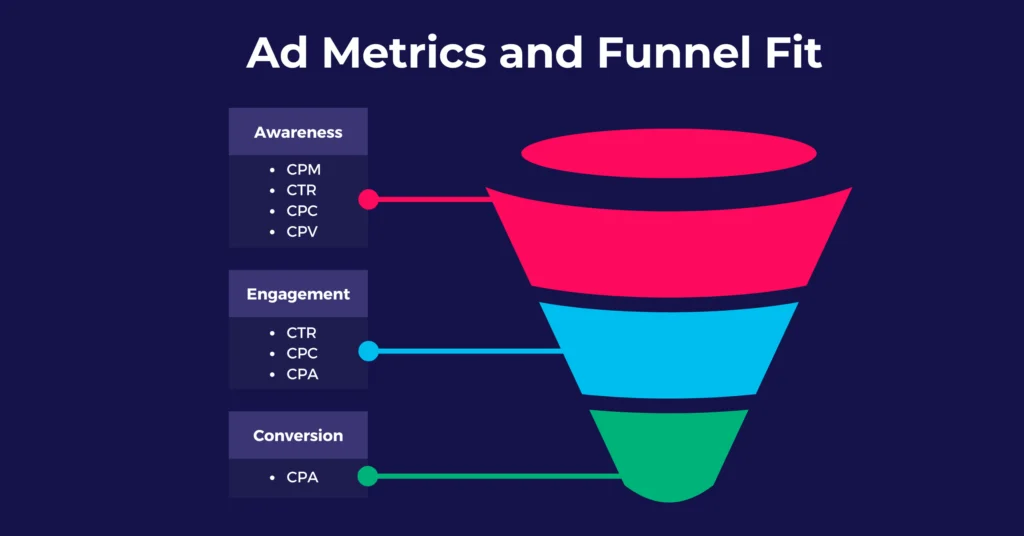
CPM vs CPC vs CPA vs CTR: Which Advertising Metric Is Best?
Choosing the right advertising metric is critical for campaign success. CPM, CPC, CPA, and CTR each serve different purposes within digital marketing. Businesses must align their chosen metric with campaign objectives, audience behavior, and desired outcomes.
While CPM focuses on visibility, CPC emphasizes traffic generation, CPA prioritizes conversions, and CTR measures engagement. Understanding how these metrics work together helps marketers create balanced advertising strategies that improve performance, reduce wasted spending, and maximize marketing return on investment.
The most effective campaigns often use multiple metrics simultaneously to evaluate overall success and identify optimization opportunities.
CPM vs CPC: Brand Awareness vs Traffic Generation
| Comparison Factor | CPM (Cost Per Mille) | CPC (Cost Per Click) |
| What You Pay For | Every 1,000 ad impressions (views) | Every click on your advertisement |
| Primary Goal | Brand awareness and audience reach | Website traffic and user engagement |
| Best For | Businesses focused on visibility, recognition, and market exposure | Businesses focused on generating visitors, leads, and conversions |
| Performance Focus | Maximizing impressions and reach | Maximizing clicks and user actions |
| Ideal Campaign Type | Brand awareness, product launches, and market expansion campaigns | Lead generation, sales campaigns, and website traffic campaigns |
| Audience Interaction Required | No user action required; payment is based on impressions | User must click the ad for the advertiser to pay |
| Budget Predictability | Easier to forecast costs based on expected impressions | Costs vary depending on click volume and competition |
| Key Success Metrics | Impressions, Reach, Frequency, Viewability, Brand Lift | Clicks, CTR, Landing Page Visits, Leads, Conversions |
| Customer Journey Stage | Top-of-funnel (Awareness Stage) | Mid-funnel and Bottom-of-funnel (Consideration & Action Stages) |
| Best Advertising Channels | Display Ads, YouTube Ads, Meta Awareness Campaigns, Programmatic Advertising | Google Search Ads, Social Media Traffic Campaigns, Retargeting Ads |
| Advantages | Broad audience exposure, increased brand recognition, scalable awareness | Direct traffic generation, measurable engagement, stronger intent signals |
| Challenges | May not generate immediate clicks or conversions | Can become expensive in competitive industries with high click costs |
| Ideal Business Objective | Introduce a brand, product, service, or message to a large audience | Drive qualified visitors to a website, landing page, or offer |
| ROI Measurement | Often measured through reach, engagement, brand recall, and assisted conversions | Typically measured through clicks, leads, sales, and conversion rates |
| When to Choose It | When your goal is to increase visibility and build brand awareness at scale | When your goal is to drive traffic, generate leads, or encourage direct action |
Which Is Better: CPM or CPC?
There is no universal winner because both serve different marketing objectives. CPM advertising is the better choice when your goal is to increase brand awareness, maximize audience reach, launch a new product, or build market visibility. CPC advertising is more effective when you want users to visit your website, complete a form, request a quote, or make a purchase.
CPM vs CPA: Reach vs Conversion-Focused Campaigns
| Comparison Factor | CPM (Cost Per Mille) | CPA (Cost Per Acquisition) |
| What You Pay For | Every 1,000 ad impressions | A completed action, conversion, or acquisition |
| Primary Goal | Brand awareness, visibility, and audience reach | Conversions, leads, sales, and customer acquisition |
| Best For | Businesses looking to increase market presence and brand recognition | Businesses focused on measurable business outcomes and ROI |
| Performance Focus | Maximizing impressions and audience exposure | Maximizing conversions and acquisition efficiency |
| Ideal Campaign Type | Awareness campaigns, product launches, and branding initiatives | Lead generation campaigns, e-commerce sales, and customer acquisition campaigns |
| Customer Journey Stage | Top-of-funnel (Awareness) | Bottom-of-funnel (Decision and Action) |
| Payment Trigger | Ad is displayed 1,000 times | User completes a desired action such as a purchase, signup, or form submission |
| Risk Level for Advertisers | Lower cost per exposure but no guarantee of action | Higher cost per conversion but directly tied to business outcomes |
| Success Metrics | Impressions, Reach, Frequency, Brand Recall, Engagement | Conversions, Leads, Sales, Revenue, Customer Acquisition Cost |
| Audience Strategy | Broad audience targeting to maximize visibility | Highly targeted audiences likely to convert |
| Campaign Optimization Focus | Reach, visibility, viewability, and engagement | Conversion rate, lead quality, sales performance, and ROI |
| Timeframe for Results | Often supports long-term brand growth and future demand generation | Typically generates more immediate and measurable results |
| Budget Efficiency Measurement | Cost per 1,000 impressions delivered | Cost per successful acquisition or conversion |
| Best Advertising Channels | Display Advertising, YouTube Ads, Social Media Awareness Campaigns, Programmatic Advertising | Search Ads, Retargeting Campaigns, Conversion-Focused Social Ads, E-commerce Advertising |
| Advantages | Large-scale audience exposure, stronger brand awareness, market penetration | Directly tied to revenue-generating actions and business growth |
| Challenges | May not generate immediate conversions | Conversion volume may be limited if targeting or offers are weak |
| Ideal Business Objective | Build awareness, educate audiences, and increase brand recognition | Generate leads, sales, subscriptions, bookings, or other measurable actions |
| ROI Evaluation | Measured through reach, engagement, assisted conversions, and brand lift | Measured through conversion value, revenue, and customer acquisition efficiency |
| When to Choose It | When introducing a brand, product, or service to a larger audience | When the goal is to maximize conversions and achieve measurable business outcomes |
CPM vs CPA: Which Advertising Model Should You Choose?
The choice between CPM and CPA depends on where your audience is in the marketing funnel and what your business wants to achieve.
- Choose CPM advertising when your goal is to increase brand awareness, expand audience reach, launch new products, or strengthen market visibility.
- Choose CPA advertising when your goal is to generate leads, sales, registrations, appointments, or other revenue-driving actions.
CPM vs CTR: Understanding Engagement and Visibility
| Comparison Factor | CPM (Cost Per Mille) | CTR (Click-Through Rate) |
| Definition | Measures the cost of 1,000 ad impressions | Measures the percentage of users who click after seeing an ad |
| Primary Purpose | Evaluate advertising visibility and audience reach | Evaluate audience engagement and ad effectiveness |
| What It Measures | Cost efficiency of reaching audiences | User interest and interaction with the advertisement |
| Formula | (Total Ad Spend ÷ Total Impressions) × 1,000 | (Total Clicks ÷ Total Impressions) × 100 |
| Focus Area | Brand exposure and awareness | Audience engagement and response |
| Key Performance Indicator | Impressions, Reach, and Cost Efficiency | Clicks, Engagement, and User Interest |
| Customer Journey Stage | Top-of-funnel (Awareness) | Mid-funnel (Interest and Consideration) |
| Success Goal | Reach more people at an efficient cost | Encourage more users to interact with the ad |
| Influenced By | Audience competition, targeting, placements, industry demand, and bidding strategy | Ad copy, visuals, offers, calls-to-action, and audience relevance |
| Indicates Campaign Visibility | Yes | No |
| Indicates Audience Engagement | Indirectly | Directly |
| Useful for Brand Awareness Campaigns | Highly effective | Secondary measurement |
| Useful for Traffic Generation Campaigns | Limited on its own | Highly effective |
| Optimization Focus | Lowering costs while maintaining quality impressions | Increasing clicks and engagement rates |
| Potential Issue | Low CPM may still result in poor campaign performance if users ignore the ads | High CTR alone does not guarantee conversions or profitability |
| Best Used For | Display advertising, video advertising, social media awareness campaigns, and programmatic advertising | Search ads, traffic campaigns, lead generation campaigns, and conversion-focused advertising |
| Business Value | Helps evaluate how cost-effectively a campaign reaches audiences | Helps determine whether the audience finds the ad relevant and compelling |
| Ideal Question Answered | “How much am I paying to reach people?” | “How many people are engaging with my ad?” |
| Role in Campaign Analysis | Measures visibility performance | Measures engagement performance |
CPM vs CTR: Why Both Metrics Matter
CPM and CTR should not be viewed as competing metrics because they measure different aspects of campaign success. CPM helps advertisers understand how efficiently they are reaching their target audience, while CTR reveals how effectively the audience responds to the advertisement.
For example:
| Scenario | CPM Result | CTR Result | Interpretation |
| Low CPM + Low CTR | Affordable reach | Weak engagement | Ads are being seen but not attracting interest |
| Low CPM + High CTR | Affordable reach | Strong engagement | Excellent campaign efficiency and audience relevance |
| High CPM + Low CTR | Expensive reach | Weak engagement | Campaign requires targeting or creative improvements |
| High CPM + High CTR | Premium reach | Strong engagement | Higher costs may be justified by strong audience response |
GDMS Recommendation
At GDMS, we recommend evaluating CPM and CTR together rather than separately. A low CPM can help reduce advertising costs, but without a healthy CTR, impressions may provide little business value. Likewise, a strong CTR combined with an excessively high CPM can reduce profitability.
The most successful advertising campaigns achieve:
- Competitive CPM rates
- Strong CTR performance
- High-quality audience reach
- Consistent engagement growth
- Improved conversion opportunities
- Better return on advertising investment
By balancing visibility (CPM) and engagement (CTR), businesses can create more effective campaigns that attract attention, generate interest, and support long-term marketing success
Choosing the Right Bidding Model Based on Campaign Objectives
Selecting the correct bidding model requires understanding the desired outcome of the campaign. CPM works best for visibility, awareness, and audience expansion. CPC is ideal for traffic generation and user engagement. CPA supports conversion-focused initiatives and direct-response marketing. Businesses should assess their goals, budget, competitive landscape, and performance expectations before choosing a bidding model. Many successful campaigns use a combination of CPM, CPC, and CPA strategies throughout the customer journey. This integrated approach helps businesses build awareness, generate interest, and drive conversions while maximizing overall advertising efficiency and return on investment.

Where to Use CPM Advertising for Maximum Results
CPM advertising can be highly effective across multiple digital channels when used strategically. The key is selecting platforms that align with campaign goals and target audience behavior. CPM works particularly well in environments where visibility, reach, and repeated exposure contribute to brand growth. Businesses can use CPM advertising for display campaigns, social media marketing, video advertising, programmatic advertising, and large-scale awareness initiatives. Choosing the right platform and audience targeting strategy ensures businesses receive maximum value from their CPM investments while achieving stronger brand recognition and market presence.
CPM for Display Advertising Campaigns
Display advertising remains one of the most common applications of CPM. Banner advertisements, responsive display ads, and visual placements across websites enable businesses to reach large audiences efficiently.
CPM for display advertising is particularly effective for increasing brand visibility, supporting product launches, and maintaining consistent audience exposure. Strategic placement selection, audience targeting, and creative optimization improve campaign performance and maximize impression value. Businesses that leverage display advertising effectively can achieve significant awareness growth while maintaining predictable advertising costs and scalable marketing operations.
CPM for Video Advertising and Brand Visibility
Video advertising offers one of the most engaging environments for CPM campaigns. Platforms such as YouTube and programmatic video networks allow businesses to deliver compelling visual messages to targeted audiences.
CPM for video advertising is especially valuable because video content captures attention, improves message retention, and increases audience engagement. Businesses seeking stronger brand storytelling, product demonstrations, or awareness-building initiatives often achieve excellent results through video CPM campaigns. High-quality creative assets combined with strategic audience targeting can significantly improve visibility and long-term brand recognition.
CPM for Social Media Ads and Audience Reach
Social media platforms provide powerful opportunities for CPM advertising. Facebook, Instagram, TikTok, LinkedIn, Pinterest, and X offer advanced audience targeting capabilities that help businesses maximize visibility among relevant users.
CPM for social media ads supports awareness campaigns, product promotions, brand-building initiatives, and audience expansion strategies. By leveraging platform-specific targeting options, advertisers can improve impression quality while maintaining cost-effective reach. Social media CPM campaigns often generate valuable engagement signals that contribute to stronger overall advertising performance.
CPM Advertising for Businesses Looking to Scale Awareness
Businesses seeking rapid visibility growth often rely on CPM advertising to scale awareness efficiently. Whether launching a startup, entering a new market, or promoting a major product release, CPM campaigns provide the reach necessary to build audience familiarity. Large-scale awareness initiatives benefit from
CPM because exposure can be increased without relying exclusively on clicks or conversions. Strategic campaign management ensures businesses maximize visibility while maintaining budget control and performance consistency.
Industries That Benefit Most from CPM Advertising
Many industries benefit from CPM advertising, including e-commerce, healthcare, technology, education, finance, entertainment, travel, real estate, automotive, and professional services.
Businesses operating in competitive markets often use CPM campaigns to maintain visibility and strengthen brand positioning. Industries with longer customer journeys particularly benefit from awareness-focused advertising because repeated exposure supports trust-building and future purchase decisions. Effective CPM strategies help businesses remain top-of-mind throughout the customer decision-making process.

CPM Campaign Strategy: How to Build High-Performing Advertising Campaigns
Developing a successful CPM campaign strategy requires careful planning, audience research, creative development, and ongoing optimization. Businesses should focus on aligning campaign objectives with audience needs while continuously monitoring performance data. Effective CPM campaigns balance visibility, engagement, and efficiency to achieve sustainable growth. Strategic planning reduces wasted spending and improves overall advertising outcomes.
Setting Campaign Objectives Before Launching CPM Advertising
Every successful CPM campaign begins with clearly defined objectives. Businesses must determine whether the goal is brand awareness, product promotion, market expansion, audience education, or customer retention.
Clear objectives guide targeting decisions, creative development, budget allocation, and performance measurement. Well-defined goals also simplify optimization efforts and improve campaign accountability.
Audience Targeting Strategies That Improve CPM Efficiency
Audience targeting is one of the most influential factors affecting CPM performance. Businesses should use demographic, geographic, behavioral, interest-based, and contextual targeting to reach relevant users.
Precise audience segmentation reduces wasted impressions and improves campaign efficiency. Advanced targeting techniques help advertisers deliver messages to users most likely to engage with their brand.
Creative Optimization Techniques for Better Ad Impressions
Creative quality directly influences CPM campaign performance. High-impact visuals, compelling messaging, strong branding, and clear value propositions increase audience attention and engagement.
Advertisers should regularly test creative variations to identify the most effective combinations. Continuous optimization helps improve impression value and strengthens overall campaign effectiveness.
Best CPM Bidding Strategy for Different Marketing Goals
The ideal CPM bidding strategy depends on campaign objectives. Awareness campaigns often prioritize maximum reach, while niche campaigns focus on premium audience quality.
Businesses should evaluate historical performance, competitive conditions, audience demand, and budget limitations when establishing bidding strategies. Regular bid adjustments help maintain efficiency and support long-term campaign success.
How to Improve Return on Ad Spend With CPM Campaigns
Improving return on ad spend requires more than simply lowering CPM rates. Businesses should focus on reaching qualified audiences, optimizing creative assets, monitoring engagement metrics, and refining campaign structure. Strong audience targeting combined with high-quality advertising content improves campaign effectiveness and contributes to stronger long-term business outcomes.
What Affects CPM Costs? Understanding the Key Pricing Factors
CPM rates vary widely depending on market conditions, audience demand, platform competition, and campaign quality. Understanding these factors helps advertisers anticipate costs, improve planning, and optimize advertising performance.
Businesses that proactively address CPM cost drivers can maintain stronger efficiency and achieve better results from their marketing investments.
Audience Competition and Market Demand
Highly competitive audiences often result in higher CPM rates because multiple advertisers compete for the same users. Industries with strong advertising demand typically experience increased costs. Businesses can reduce expenses by identifying alternative audience segments and testing broader targeting strategies.
Ad Placement Quality and Inventory Availability
Premium placements generally command higher CPM rates because they offer greater visibility and engagement potential. Limited advertising inventory during high-demand periods can also increase costs. Evaluating placement quality helps businesses balance visibility and budget efficiency.
Industry, Seasonality, and Geographic Targeting
Industry competition, seasonal demand, and geographic targeting significantly influence CPM pricing. Holiday periods, major events, and peak shopping seasons often increase advertising costs. Businesses should adjust strategies based on market conditions and campaign objectives.
Ad Relevance, Quality Scores, and Engagement Signals
Advertising platforms reward relevant content with improved delivery and potentially lower costs. Strong engagement signals, high-quality creative assets, and positive user interactions contribute to better campaign performance and more efficient CPM rates.
Platform-Specific Factors That Influence CPM Rates
Each advertising platform uses unique algorithms and bidding systems that affect CPM pricing. Audience size, placement availability, competition levels, targeting options, and campaign objectives all contribute to cost variations. Understanding platform-specific dynamics helps advertisers optimize spending more effectively.

Why Is My CPM So High? Common Problems and Solutions
High CPM rates can reduce campaign efficiency and limit advertising reach. Identifying the root causes allows businesses to implement corrective actions and improve performance. Most CPM challenges can be addressed through better targeting, creative optimization, campaign restructuring, and ongoing performance analysis.
Poor Audience Targeting and Narrow Segmentation
Overly restrictive targeting often increases competition and reduces delivery opportunities. Expanding audience parameters strategically can improve reach while lowering CPM costs.
Low Ad Relevance and Creative Fatigue
Repeated exposure to the same creative assets can reduce engagement and increase advertising costs. Regular creative refreshes help maintain audience interest and improve campaign performance.
Inefficient Campaign Structure and Budget Allocation
Poor campaign organization can create delivery inefficiencies that drive CPM rates higher. Structured campaigns with clearly defined objectives support better optimization and stronger results.
High-Competition Niches and Expensive Markets
Certain industries naturally experience elevated CPM rates due to intense advertiser competition. Businesses operating in these markets should focus on audience quality, creative excellence, and strategic optimization.
CPM Troubleshooting Guide for Advertisers
Effective CPM troubleshooting involves analyzing targeting settings, audience overlap, creative performance, placement quality, bidding strategies, frequency levels, and engagement metrics. Regular performance reviews help identify inefficiencies before they significantly impact campaign outcomes.

How to Reduce CPM in Advertising Without Losing Performance
Reducing CPM does not mean sacrificing campaign quality or audience reach. The most successful advertisers focus on improving targeting efficiency, creative relevance, placement quality, and campaign structure. By identifying wasteful spending and optimizing performance drivers, businesses can achieve lower CPM rates while maintaining strong visibility and engagement.
Effective CPM reduction strategies help advertisers maximize advertising budgets, improve return on ad spend, and generate more valuable impressions. A data-driven approach ensures that cost savings contribute to long-term campaign success rather than reducing overall advertising effectiveness.
Proven Ways to Lower CPM Costs
Businesses can lower CPM costs by improving audience targeting, testing broader audience segments, optimizing ad creatives, refining bidding strategies, and eliminating low-performing placements. Campaigns that maintain high relevance scores often receive more favorable delivery opportunities from advertising platforms.
Advertisers should continuously monitor performance data and adjust strategies based on audience behavior. Reducing audience overlap, improving engagement rates, and leveraging automated optimization tools can also contribute to lower CPM rates.
Consistent testing and performance analysis help businesses identify cost-saving opportunities while maintaining strong campaign visibility and marketing effectiveness.
How to Get Better Ad Impressions at Lower Costs
Improving impression quality while reducing costs requires strategic planning and ongoing optimization. Advertisers should focus on audience relevance, placement selection, and creative excellence.
High-quality impressions are more valuable than large volumes of low-quality exposure. Businesses can improve results by targeting users who are most likely to engage with their content. Leveraging lookalike audiences, contextual targeting, and programmatic optimization can increase impression efficiency.
Monitoring viewability rates and engagement metrics ensures that advertising budgets generate meaningful visibility rather than simply accumulating impression counts.
Audience Expansion and Smart Targeting Techniques
Expanding audience reach strategically can often reduce CPM rates while increasing overall campaign scale. Instead of targeting highly restrictive segments, advertisers should explore broader audience categories supported by behavioral and interest-based data.
Smart targeting techniques include lookalike audiences, predictive targeting, retargeting, and demographic expansion. These approaches allow businesses to reach new prospects while maintaining relevance.
Audience testing helps identify the most efficient segments and supports continuous campaign improvement. Effective targeting strategies create a balance between cost efficiency and high-quality audience engagement.
Creative Testing Strategies to Reduce Advertising Costs With CPM
Creative testing plays a major role in CPM optimization. Advertisements that generate stronger engagement signals often receive better delivery and lower costs. Businesses should test multiple headlines, images, videos, calls-to-action, and messaging variations.
A/B testing allows advertisers to identify top-performing creatives and eliminate underperforming assets. Regular creative updates prevent audience fatigue and maintain engagement levels. Strong creative performance contributes to higher relevance scores, improved impression quality, and lower CPM rates across advertising platforms.
Budget Optimization Tips for Better Efficiency
Budget optimization requires allocating resources toward the highest-performing audiences, placements, and creatives. Businesses should monitor campaign performance regularly and shift spending away from underperforming segments. Automated bidding strategies can help improve efficiency while maintaining campaign objectives.
Advertisers should also evaluate frequency levels, audience saturation, and platform-specific opportunities. Smart budget management enables businesses to maximize advertising value while controlling CPM costs and improving overall campaign profitability.

How to Improve CPM Campaigns for Better Advertising Results
Successful CPM campaigns require continuous optimization and performance monitoring. Businesses that regularly analyze campaign data can identify opportunities for improvement and make informed decisions that strengthen results. Optimization should focus on audience quality, creative effectiveness, placement selection, bidding strategies, and engagement metrics. A proactive approach helps advertisers maintain campaign efficiency and achieve stronger long-term outcomes.
Advanced CPM Campaign Optimization Techniques
Advanced optimization techniques include audience segmentation, dynamic creative testing, frequency management, predictive targeting, and machine learning-driven bidding strategies. These methods help advertisers improve campaign precision and maximize impression value.
Businesses that embrace advanced optimization practices often achieve stronger visibility, lower costs, and better engagement rates. Continuous experimentation and performance analysis are essential for maintaining competitive advertising performance.
How to Optimize CPM Campaigns for Higher Reach
Increasing reach requires balancing audience expansion with relevance. Businesses should explore broader targeting options while maintaining alignment with campaign objectives. Platform-specific audience tools, lookalike modeling, and interest-based targeting can help expand reach efficiently.
Advertisers should also optimize ad delivery schedules and placement strategies to maximize visibility. Higher reach campaigns contribute to stronger brand awareness and broader market penetration.
Improve Advertising Efficiency With CPM Best Practices
Advertising efficiency improves when campaigns focus on quality impressions, relevant audiences, compelling creative assets, and ongoing optimization. Businesses should monitor engagement metrics, viewability rates, audience overlap, and frequency levels.
Best practices include maintaining creative freshness, leveraging data-driven targeting, and regularly reviewing campaign performance. These efforts help advertisers maximize advertising value while minimizing unnecessary spending.
Performance Monitoring and Ongoing Optimization
Continuous performance monitoring is essential for sustained CPM success. Businesses should track impressions, reach, engagement, CTR, conversion performance, and return on ad spend.
Regular reporting enables advertisers to identify trends, address inefficiencies, and capitalize on growth opportunities. Ongoing optimization ensures campaigns remain aligned with business goals and market conditions.
Scaling Successful CPM Campaigns
Once a campaign demonstrates consistent success, businesses can scale performance through audience expansion, increased budgets, additional placements, and cross-platform deployment. Scaling should occur gradually to preserve efficiency and maintain performance quality.
Effective scaling strategies enable businesses to increase visibility and market reach while protecting advertising profitability.

Leading CPM Advertising Platforms and Their Benefits
Different CPM advertising platforms offer unique advantages based on audience demographics, campaign objectives, and advertising formats. Selecting the right platform is critical for maximizing campaign performance and achieving business goals. Advertisers should evaluate audience reach, targeting capabilities, creative formats, and cost efficiency before choosing a platform.
Google Display Network CPM Advertising
Google Display Network provides access to millions of websites and applications, making it one of the largest CPM advertising ecosystems available. Businesses can use advanced targeting options to reach highly relevant audiences.
The platform supports broad awareness campaigns while offering scalable reach and strong reporting capabilities.
Google Ads CPM Advertising
Google Ads allows advertisers to run CPM campaigns across display, video, and partner networks. The platform offers sophisticated targeting, automated bidding, audience insights, and performance measurement tools. Businesses benefit from extensive reach and flexible campaign management options.
YouTube CPM Advertising
YouTube CPM advertising enables brands to engage audiences through video content. Video advertisements often achieve higher engagement and stronger message retention than static formats.
Businesses can use YouTube to build awareness, educate audiences, and increase brand visibility through compelling storytelling.
Meta Ads CPM for Facebook and Instagram Campaigns
Meta Ads provide powerful audience targeting capabilities across Facebook and Instagram. Businesses can leverage demographic, behavioral, and interest-based targeting to maximize campaign effectiveness. CPM campaigns on Meta platforms support awareness, engagement, and audience expansion objectives.
Facebook CPM Advertising Best Practices
Successful Facebook CPM campaigns focus on audience relevance, creative quality, and engagement optimization. Advertisers should test multiple audience segments, refresh creative assets regularly, and monitor performance metrics closely. Consistent optimization improves visibility and campaign efficiency.
Instagram CPM Campaign Strategies
Instagram CPM campaigns perform best when supported by visually engaging content. High-quality imagery, short-form videos, Stories, and Reels can significantly improve engagement.
Businesses should align creative assets with audience preferences and platform behaviors to maximize advertising effectiveness.
TikTok CPM Advertising for Modern Audience Engagement
TikTok provides access to highly engaged audiences through short-form video content. Businesses can use CPM advertising to increase brand awareness, reach younger demographics, and participate in trending content formats. Creative authenticity often drives stronger performance on the platform.
LinkedIn CPM Advertising for B2B Marketing
LinkedIn CPM advertising is particularly effective for B2B organizations seeking professional audiences. Businesses can target decision-makers, executives, industry professionals, and specific job roles. While CPM rates may be higher, audience quality often justifies the investment.
Pinterest CPM Advertising for Visual Brands
Pinterest offers strong opportunities for businesses in fashion, home improvement, lifestyle, food, beauty, and design industries. Visual discovery behavior makes the platform well suited for awareness-focused CPM campaigns that inspire consumer action.
X Ads CPM for Brand Awareness Campaigns
X advertising enables businesses to participate in real-time conversations and increase brand visibility. CPM campaigns on the platform support awareness initiatives and audience engagement during trending events and industry discussions.
Microsoft Advertising CPM Opportunities
Microsoft Advertising provides access to valuable audiences across search, display, and partner networks. Businesses can diversify advertising efforts and reach users who may not be as active on other platforms.
Amazon DSP CPM Advertising for E-Commerce Growth
Amazon DSP enables advertisers to reach shoppers based on purchase behavior and consumer intent. CPM advertising through Amazon supports brand awareness, product visibility, and customer acquisition efforts within the e-commerce ecosystem.
Display & Video 360 CPM Solutions
Display & Video 360 offers enterprise-level campaign management capabilities, advanced audience targeting, and programmatic advertising solutions. Businesses can manage large-scale CPM campaigns with greater precision and control.
AdRoll CPM Advertising for Retargeting Campaigns
AdRoll specializes in retargeting and audience re-engagement. CPM campaigns on AdRoll help businesses reconnect with previous website visitors and nurture prospects through multiple stages of the customer journey.
Programmatic CPM Platforms and Automated Media Buying
Programmatic advertising platforms use automation and real-time bidding to optimize CPM performance. Businesses benefit from improved targeting precision, scalable reach, and efficient media buying processes. Programmatic solutions support advanced campaign management and continuous optimization.
What Is a Good CPM Rate? Industry Benchmarks and Performance Expectations
Understanding CPM benchmarks helps businesses evaluate campaign performance and identify opportunities for improvement. While there is no universal CPM rate, comparing results against industry standards provides valuable context. Advertisers should consider audience quality, campaign objectives, platform selection, and market conditions when assessing CPM performance.
Average CPM Rates Across Major Advertising Platforms
CPM rates vary significantly across advertising platforms. Social media, display advertising, video campaigns, programmatic networks, and B2B platforms each have unique pricing structures. Businesses should benchmark campaigns against platform-specific averages rather than relying on generalized figures.
Factors That Determine a Competitive CPM
Competitive CPM rates depend on audience demand, industry competition, creative quality, geographic targeting, placement selection, and seasonal trends. Advertisers should focus on achieving efficient results rather than simply pursuing the lowest possible CPM.
How to Benchmark Your Campaign Against Industry Standards
Benchmarking requires comparing campaign performance against relevant industry averages, competitor activity, historical results, and business objectives. Regular benchmarking helps businesses identify strengths, weaknesses, and optimization opportunities that support ongoing advertising success.

Professional CPM Advertising Services for Business Growth
Professional CPM advertising services help businesses maximize brand visibility, improve audience reach, and generate measurable marketing results. Managing CPM campaigns requires strategic planning, audience analysis, creative development, bid optimization, performance monitoring, and continuous improvement.
Businesses that partner with experienced CPM advertising specialists gain access to proven strategies, advanced targeting methods, and data-driven optimization techniques. Professional campaign management helps reduce wasted spending, improve advertising efficiency, and increase return on investment.
Whether a company wants to expand market awareness, launch a new product, or strengthen brand recognition, expert CPM management provides the structure and expertise necessary for sustainable growth and long-term success.
Affordable CPM Advertising Solutions for Small and Growing Businesses
Small and growing businesses often face budget limitations that make advertising efficiency a top priority. Affordable CPM advertising solutions help organizations maximize exposure without exceeding financial constraints.
At GDMS, campaigns are designed to reach highly relevant audiences while maintaining cost-effective spending. Through strategic audience targeting, creative optimization, and intelligent budget allocation, businesses can generate substantial visibility at competitive CPM rates.
These solutions allow startups and emerging brands to build awareness, compete effectively, and establish a strong market presence. Affordable advertising strategies ensure that every marketing dollar contributes toward measurable growth and long-term business development.
CPM Campaign Management Services for Consistent Results
Effective CPM campaign management involves far more than launching advertisements. Continuous monitoring, audience refinement, creative testing, budget optimization, and performance analysis are essential for maintaining strong results.
GDMS provides comprehensive CPM campaign management services designed to improve campaign efficiency and maximize visibility. Our team evaluates key performance indicators, identifies growth opportunities, and implements strategic adjustments that support business objectives.
Consistent management ensures campaigns remain competitive, relevant, and aligned with evolving market conditions. Through ongoing optimization, businesses can achieve stronger awareness, improved engagement, and greater value from their advertising investments.
Digital Marketing CPM Management and Reporting
Data-driven decision-making is essential for successful CPM advertising. GDMS provides comprehensive reporting and performance analysis that helps businesses understand campaign effectiveness. Detailed reporting includes impressions, reach, engagement, CTR, audience insights, conversion trends, and return on ad spend.
These insights enable informed decision-making and support continuous improvement efforts. Transparent reporting helps businesses evaluate progress toward objectives while identifying opportunities for optimization.
By combining advanced analytics with strategic expertise, GDMS ensures clients receive actionable recommendations that strengthen campaign performance and contribute to sustainable business growth.
Paid Advertising Management Services for Multi-Channel Campaigns
Modern consumers interact with brands across multiple digital channels. Effective advertising strategies require coordinated campaign management that delivers consistent messaging and optimized performance across platforms.
GDMS manages multi-channel CPM advertising campaigns spanning display networks, social media platforms, video advertising environments, programmatic ecosystems, and retargeting solutions. Integrated campaign management ensures consistent audience experiences while maximizing reach and efficiency. Businesses benefit from unified reporting, centralized optimization, and strategic alignment across all advertising channels.
This comprehensive approach improves visibility, strengthens brand recognition, and enhances overall marketing effectiveness.
Display Advertising Services and Programmatic Advertising Services
Display and programmatic advertising provide scalable opportunities for businesses seeking broad audience exposure. GDMS develops customized display advertising campaigns designed to generate high-quality impressions and improve brand awareness.
Programmatic advertising services leverage automation, real-time bidding, advanced audience targeting, and data-driven optimization to maximize campaign efficiency. These solutions help businesses reach relevant audiences across premium digital environments while maintaining cost-effective performance.
Through strategic placement selection, audience segmentation, and ongoing optimization, display and programmatic campaigns contribute significantly to long-term business growth and advertising success.
Professional CPM Advertising Solutions for Brands Seeking Scale
Businesses seeking aggressive growth require scalable advertising solutions that support expanding market reach and increased visibility. GDMS develops professional CPM advertising solutions tailored to the unique needs of growing brands. Our strategies focus on audience expansion, performance optimization, creative innovation, and efficient budget management.
By combining advanced targeting capabilities with comprehensive campaign oversight, we help businesses increase awareness while maintaining strong advertising efficiency. Scalable CPM solutions enable organizations to enter new markets, strengthen competitive positioning, and achieve sustainable growth through strategic digital advertising initiatives.

Why Choose GDMS for CPM Advertising and Digital Marketing Success?
Choosing the right advertising partner can significantly impact campaign outcomes. GDMS combines industry expertise, advanced marketing strategies, data-driven optimization, and personalized service to deliver measurable advertising results.
Our team understands the complexities of CPM advertising and develops customized solutions designed to support business growth. From audience research and campaign planning to optimization and reporting, every aspect of our process focuses on maximizing value and improving performance. Businesses choose GDMS because we prioritize transparency, efficiency, innovation, and long-term success.
Complete CPM Marketing Services USA Businesses Can Trust
GDMS provides comprehensive CPM marketing services designed specifically for businesses operating in competitive markets throughout the United States. Our solutions cover strategy development, audience targeting, campaign management, optimization, reporting, and performance analysis. We focus on delivering measurable results that support awareness, engagement, and growth objectives.
Businesses trust GDMS because we combine proven methodologies with personalized service and a commitment to achieving client success. Every campaign is managed with precision and strategic focus to ensure maximum advertising effectiveness.
Expert CPM Campaign Management and Optimization Experts
Campaign success depends on ongoing optimization and strategic management. GDMS employs experienced CPM campaign specialists who continuously analyze performance data, identify improvement opportunities, and implement effective optimization strategies. Our expertise spans multiple advertising platforms, industries, and campaign objectives.
By maintaining a proactive approach to campaign management, we help businesses improve efficiency, reduce costs, and achieve stronger advertising outcomes. Expert oversight ensures campaigns remain aligned with market conditions and business goals.
Dedicated CPM Advertising Specialists Focused on ROI
Return on investment remains one of the most important measures of advertising success. GDMS assigns dedicated CPM advertising specialists who focus on maximizing campaign value through strategic planning and continuous optimization. Our team monitors key performance indicators, refines targeting strategies, and enhances creative effectiveness to improve results.
By prioritizing efficiency and measurable outcomes, we help businesses achieve stronger returns from their advertising investments while supporting long-term growth objectives.
Professional Digital Advertising Services Tailored to Your Industry
Different industries require unique advertising approaches. GDMS develops customized digital advertising strategies based on industry dynamics, audience behavior, competitive conditions, and business objectives.
Our tailored approach ensures campaigns remain relevant, effective, and aligned with market demands. Whether serving healthcare, technology, education, finance, retail, professional services, or e-commerce organizations, we create solutions designed to generate meaningful results and sustainable growth.
Custom CPM Advertising Packages for Every Business Size
Every business has unique goals, budgets, and growth requirements. GDMS offers flexible CPM advertising packages designed to accommodate organizations of all sizes. From startups and small businesses to large enterprises, our solutions provide the right balance of strategy, management, and optimization. Custom packages ensure businesses receive services aligned with their objectives while maximizing advertising value and maintaining budget efficiency.
CPM Marketing Consulting and Strategic Growth Planning
Successful advertising requires strategic direction and long-term planning. GDMS provides CPM marketing consulting services that help businesses develop effective growth strategies, optimize advertising investments, and improve campaign performance.
Our consulting approach focuses on identifying opportunities, solving marketing challenges, and creating actionable plans that support sustainable success. Strategic guidance empowers businesses to make informed decisions and achieve stronger advertising outcomes.
Online Advertising Experts Delivering Measurable Results
GDMS is committed to delivering measurable results through strategic online advertising solutions. Our team combines expertise, technology, analytics, and creativity to develop campaigns that drive visibility, engagement, and growth.
Every recommendation is supported by data and focused on achieving meaningful business objectives. Through continuous optimization and transparent reporting, we help businesses maximize the value of their digital advertising investments.

Step-by-Step Process GDMS Uses to Optimize CPM Advertising Campaigns
Successful CPM advertising requires a structured process that combines research, planning, execution, optimization, and analysis. GDMS follows a proven methodology designed to maximize campaign effectiveness while supporting long-term business growth. Our step-by-step approach ensures every campaign receives the attention and strategic oversight necessary to achieve outstanding results.
Campaign Research and Market Analysis
Every campaign begins with comprehensive research and analysis. GDMS evaluates industry trends, competitor activity, audience behavior, market opportunities, and advertising benchmarks. This research provides the foundation for informed strategic decisions and helps identify opportunities for competitive advantage. Understanding the market environment enables us to develop campaigns that resonate with target audiences and support business objectives.
Audience Targeting and Segmentation
Audience targeting is one of the most important factors influencing CPM performance. GDMS develops detailed audience profiles based on demographics, interests, behaviors, geographic locations, and purchasing patterns. Strategic segmentation ensures advertisements reach the most relevant users while minimizing wasted impressions. Effective targeting improves campaign efficiency and supports stronger advertising outcomes.
Ad Creative Development and Testing
Compelling creative assets play a critical role in campaign success. GDMS develops engaging advertisements designed to capture attention, communicate value, and strengthen brand recognition. Multiple creative variations are tested to identify top-performing combinations. Ongoing creative optimization helps maintain audience engagement and improve overall advertising performance.
Campaign Launch, Monitoring, and Optimization
Once campaigns are launched, GDMS continuously monitors performance metrics and platform insights. Real-time analysis allows us to identify opportunities for improvement and implement strategic adjustments quickly. Optimization efforts focus on targeting, bidding, placements, creative performance, and budget allocation. This proactive approach ensures campaigns remain efficient and aligned with business goals.
Performance Reporting and Continuous Improvement
Transparent reporting provides businesses with clear visibility into campaign performance. GDMS delivers detailed performance reports that highlight key metrics, achievements, challenges, and optimization opportunities.
Continuous improvement is built into every campaign, ensuring long-term growth and sustained advertising success. By leveraging data-driven insights, we help businesses make informed decisions that strengthen future marketing initiatives.

Build Stronger Brand Awareness and Advertising Performance With GDMS
Understanding Cost Per Mille (CPM) is essential for businesses seeking to improve advertising visibility, reach larger audiences, and maximize marketing efficiency. From learning what CPM is in marketing and how to calculate CPM to implementing advanced optimization strategies, businesses that master CPM advertising gain a significant competitive advantage.
Whether you need:
- CPM Advertising Services – Strategic campaigns designed to maximize brand awareness, audience reach, and advertising efficiency.
- CPM Campaign Management Services – Complete campaign setup, monitoring, optimization, and performance reporting to ensure consistent results.
- Google Display Network (GDN) CPM Advertising – Reach potential customers across millions of websites, apps, and digital properties through targeted display advertising.
- Google Ads CPM Campaign Management – Professionally managed CPM campaigns that improve visibility and support long-term business growth.
- Meta Ads CPM Campaigns – High-performance Facebook and Instagram advertising campaigns focused on audience engagement and brand recognition.
- Facebook CPM Advertising Solutions – Cost-effective strategies to increase impressions, reach, and audience awareness on Facebook.
- Instagram CPM Campaign Management – Visually driven advertising campaigns that improve brand exposure and audience interaction.
- TikTok CPM Advertising – Creative, engaging campaigns designed to connect brands with highly active and trend-driven audiences.
- LinkedIn CPM Advertising – Professional B2B advertising solutions that help businesses reach decision-makers, executives, and industry professionals.
- YouTube CPM Advertising – Video advertising campaigns that enhance brand storytelling, audience engagement, and market visibility.
- Pinterest CPM Advertising – Targeted campaigns that help visual brands connect with users actively seeking inspiration and products.
- X (Twitter) CPM Advertising – Brand awareness campaigns designed to increase visibility and engagement through real-time conversations.
- Amazon DSP CPM Advertising – Audience-focused advertising strategies that help e-commerce businesses reach shoppers throughout their buying journey.
- Programmatic Advertising Services – Automated media buying solutions that optimize ad delivery, targeting, and campaign performance in real time.
- Display & Video 360 (DV360) Campaign Management – Advanced programmatic advertising solutions for large-scale audience targeting and optimization.
- AdRoll CPM Retargeting Campaigns – Re-engagement strategies that help businesses reconnect with previous website visitors and prospects.
- Multi-Channel Paid Advertising Management – Integrated campaign management across multiple advertising platforms for consistent performance and messaging.
- Audience Targeting and Segmentation Services – Advanced targeting strategies that improve impression quality and campaign efficiency.
- Creative Development and Ad Optimization – High-converting ad creatives designed to increase engagement and maximize advertising effectiveness.
- CPM Campaign Optimization Services – Continuous performance improvements focused on lowering costs and increasing advertising impact.
- Digital Marketing CPM Management – Comprehensive campaign oversight combining analytics, optimization, reporting, and strategic planning.
- Performance Tracking and Reporting – Transparent reporting that provides insights into impressions, reach, engagement, CPM, and return on ad spend.
- Custom CPM Advertising Strategies – Tailored advertising plans aligned with your industry, goals, audience, and budget.
- ROI-Focused Advertising Solutions – Data-driven strategies designed to improve campaign efficiency, increase brand exposure, and support long-term business growth.
Our team develops tailored advertising strategies, optimizes campaign performance, reduces unnecessary costs, improves return on ad spend, and helps businesses achieve sustainable success through professional digital advertising services.
Ready to Improve Your CPM Advertising Results?
Partner with GDMS to:
- Increase brand awareness and audience reach
- Reduce advertising costs through strategic optimization
- Improve CPM campaign efficiency and performance
- Access expert campaign management and reporting
- Scale successful advertising campaigns confidently
- Achieve measurable business growth with data-driven strategies
Contact GDMS today and discover how our professional CPM advertising specialists can help your business build visibility, generate results, and grow faster through smarter digital advertising solutions.